


Introducing Circudynamics: systematic integration of strategy, worldbuilding, technology, culture & brand for circular transformation advantage.

Christian is dedicated to the proposition that the road to circularity runs through brands and looks forward to a future that is aspirational and delightful for everyone. He has held leadership positions at Google, JetBlue, McKinsey and a number of technology startups. Christian holds an MBA from Duke University, an MSFS in International Business Diplomacy from Georgetown University and an AB in Philosophy from Colgate University.
Introducing “Circudynamics.”
People want to understand why circular transformation matters, and how to achieve it systematically. That’s why I’m writing my first Circudyne Letter piece on Introducing Circudynamics: The Art and Science of Circular Transformation. Before diving into the compelling case for circular economy transformation in future pieces, it makes sense to establish the integrated framework that makes such transformation possible. The Circudyne Letter exists to share this transformation architecture with the growing community of circular economy builders—those ready to move from exploring possibilities to building realities. This publication is dedicated to them.
Five years ago, I made a big decision: to walk away from a career in managing leading-edge technology startups to focus entirely on circular economy transformation. The catalyst wasn’t idealism—it was pattern recognition.
The circular economy field had a problem. Despite its transformational potential, practitioners were treating it like a sustainability initiative rather than a business transformation methodology. The focus was fixed on back-of-house operations—supply chains, procurement, resource efficiency—while the front-of-house was underserved. Consumer preferences, experience design, and shared vision were afterthoughts.
I saw the potential for circularity to succeed like Lean. Lean and circularity took similar systems-level approaches to eliminating waste. The difference was how much of the value chain they took into account: Lean limited itself to addressing the space between supplier and distributor, while circularity looked at the whole thing.
While working on Lean transformation engagements earlier in my career as a strategy consultant, I’d witnessed remarkable consistency of results. To be sure, companies that mastered Lean principles enjoyed the headline efficiency benefits. What was striking was the second-order benefits: better organizational health that correlated to top-tier enterprise value.
If it worked for Lean, why couldn’t it work for circular?
But it wasn’t so simple. After five years of experience with hundreds of CE practitioners, I kept encountering the same frustrations. Leaders would ask for metrics and KPIs to measure a future that hadn’t been invented yet. They were struggling to fill in the blanks of a half-century old playbook that was looking increasingly obsolete: incrementalism wasn’t helping them take the transformational leap that circular economy demands. They knew Buckminster Fuller was right—”You never change things by fighting the existing reality. To change something, build a new model that makes the existing model obsolete”—but they lacked the integrated approach to build that new model.
Something new was needed. That’s why I developed an integrated transformational architecture that gives brands the tools they need to build an aspirational and delightful future based on circularity—one that future-proofs them for the world to come.
I call it “Circudynamics.”
Circudynamics integrates five domains that traditional sustainability approaches treat in isolation:
Horizons (strategy) reveals what would have to be true for circular futures to emerge, working backwards from aspirational outcomes rather than forward from current constraints. Living Futures (worldbuilding) creates experiential prototypes where stakeholders (especially consumers) can actually feel what circular abundance is like, moving beyond abstract benefits to visceral desire. Catalysts (technology and progress) maps the technological, sociological, and economic forces converging to make circular models not just possible, but profitable. Connection (culture) reads the momentum and relationship dynamics that determine whether transformation actually takes hold. And Craft (integrated organization) weaves it all into beautiful holistic solutions that are so coherent, consumers don’t just accept circular approaches—they prefer them.
This isn’t another framework for sustainability teams to implement in isolation. Circudynamics recognizes that circular transformation requires the same systematic integration that made Lean revolutionary: when strategy, operations, culture, and brand all reinforce the same principles, you don’t just improve—you fundamentally outcompete linear business models. Because waste is waste.
The art lies in navigating situations that are genuinely new—where traditional metrics don’t exist yet and you can’t iterate your way to breakthrough insights. The science provides systematic knowledge intentionally designed to serve breakthrough vision rather than optimize existing operations.
This is The Circudyne Letter. Published weekly, for now it is the primary channel for syndicating the transformational architecture that is Circudynamics. It is an act of love, and a gesture of support, for the thousands of people who are building our circular future.
The rest of this essay covers how different types of leaders can apply Circudynamics to their transformation challenges, plus the practitioner insights from five years of developing this methodology.
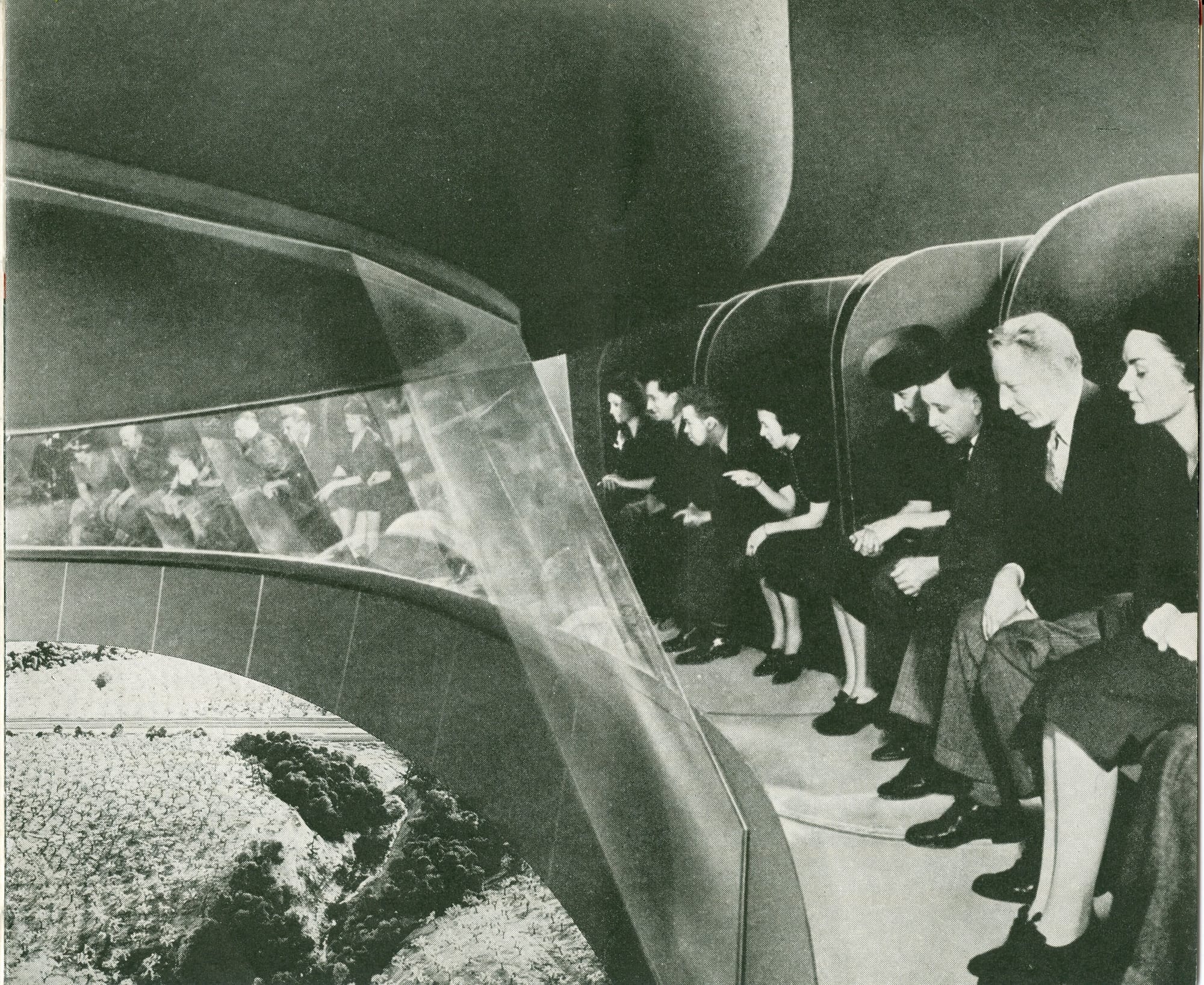
Excerpted image from “Futurama,” 1939, in the 1939-1940 New York World’s Fair Collection. Museum of the City of New York
So What?
For Skeptical Executives:
If you’re wondering whether circular transformation is worth the investment, consider this: just as Lean manufacturing separated winners from losers in the 1980s-1990s, circular economy mastery will determine market leadership for the next 20 years. The question isn’t whether this transformation will happen—it’s whether your company will lead it or be disrupted by it.
Circudynamics gives you the systematic advantage that comes from integration. When all five domains work together, you don’t just reduce costs or improve sustainability metrics—you create business models that linear competitors can’t match. Resource efficiency drives dramatic cost advantages. Network effects proliferate. Brand positioning and solution design around circular principles attracts top talent and customer loyalty that transcends price competition.
For Innovation Leaders:
You already understand that incremental improvements won’t create the breakthrough your organization needs. Circudynamics offers the same systematic competitive advantage that Lean provided to Toyota and the many companies that followed their example: fundamental outperformance rather than incremental improvement.
The methodology’s power comes from transdisciplinary synthesis—creating solutions that couldn’t exist within any single domain alone. When your strategy (Horizons) is informed by experiential prototyping (Living Futures), enabled by technological convergence (Catalysts), culturally resonant (Connection), and beautifully executed (Craft), you build circular business models that feel inevitable to customers rather than imposed.
For Risk-Averse Decision Makers:
The greatest risk is not transforming. Linear business models have reached the end of the line. Circudynamics provides a proven framework for transformation that reduces execution risk through systematic integration.
Rather than betting everything on a single circular initiative that might fail in isolation, you develop capabilities across all five domains simultaneously. This creates multiple pathways to success and ensures that even partial implementation delivers measurable business value while building toward complete transformation.
The Implementation Reality:
Most organizations fail at circular transformation because they treat it as a project rather than a practice. They launch subscale pilot programs in isolation, measure against at-scale linear KPIs, and wonder why breakthrough results don’t emerge. Circudynamics recognizes that circular transformation requires the same systematic commitment that made Lean revolutionary: organizational alignment around new principles of value creation.
Practitioner Insights
What Surprised Me Most:
The five domains didn’t emerge from academic research—they crystallized from exposure to hundreds of circular initiatives. I kept encountering the same integration failures: brilliant strategies that felt abstract, compelling visions that seemed impossible, perfect technologies that nobody wanted, cultural insights that never became action, beautiful brands built on unsustainable foundations.
The breakthrough came when I realized these weren’t separate problems requiring separate solutions. They were symptoms of the same systematic issue: circular transformation requires coordination across disciplines that business schools and consulting firms traditionally keep separate. Once I started treating integration as the primary challenge rather than the secondary one, the methodology began writing itself.
The Hardest Part:
Underestimating the skills that circularity requires. There is no “one thing” that will unlock circular transformation. CEOs want the strategic insight. Innovation teams want the technology breakthrough. Marketing leaders want the positioning strategy. Culture teams want the change management playbook.
But circular transformation isn’t reducible to any single domain. The methodology’s power comes from the spaces between domains—where strategy becomes experience, where technology enables culture, where brand expression reinforces business model innovation. Learning to hold complexity without losing clarity became the essential practitioner skill.
What I’d Do Differently:
I’d have started with the worldbuilding. It carries enormous emotional potential for teams and customers. That is because to appreciate circular economy outcomes, you have to understand them; and to understand them, you have to first experience them. Worldbuilding resolves the paradox of experiencing something that doesn’t yet exist. It does this by orchestrating a future that corresponds to what people care about.
I’d also document the methodology development process more carefully. Every breakthrough felt obvious in retrospect, but the path between problems and solutions was never linear. Understanding how practical wisdom develops—how phronesis emerges from repeated engagement with new situations—is as valuable as the methodology itself.
The Meta-Lesson:
Building transformation methodologies requires the same discipline integration they ultimately provide. You can’t develop systematic approaches to transdisciplinary problems using single-discipline thinking. The methodology had to embody the integration it teaches, which meant learning to think like a strategist, designer, technologist, anthropologist, and brand architect simultaneously.
That’s why Circudynamics feels different from traditional conceptual frameworks. It wasn’t built to optimize existing operations—it was built to navigate genuinely new territory where the pathways emerge through practice rather than planning.
No Comments